Say it, and it's done.
You think. We deliver the results.
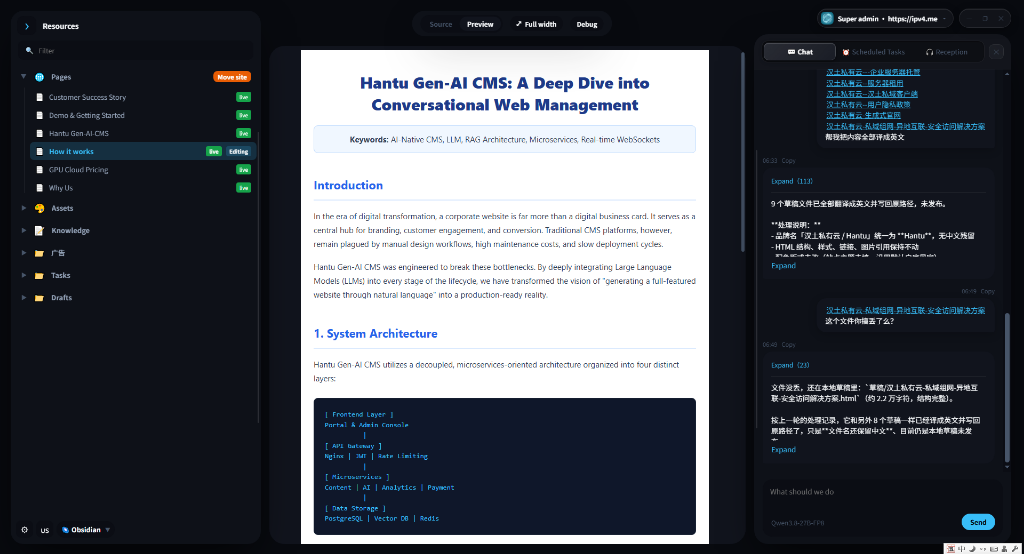
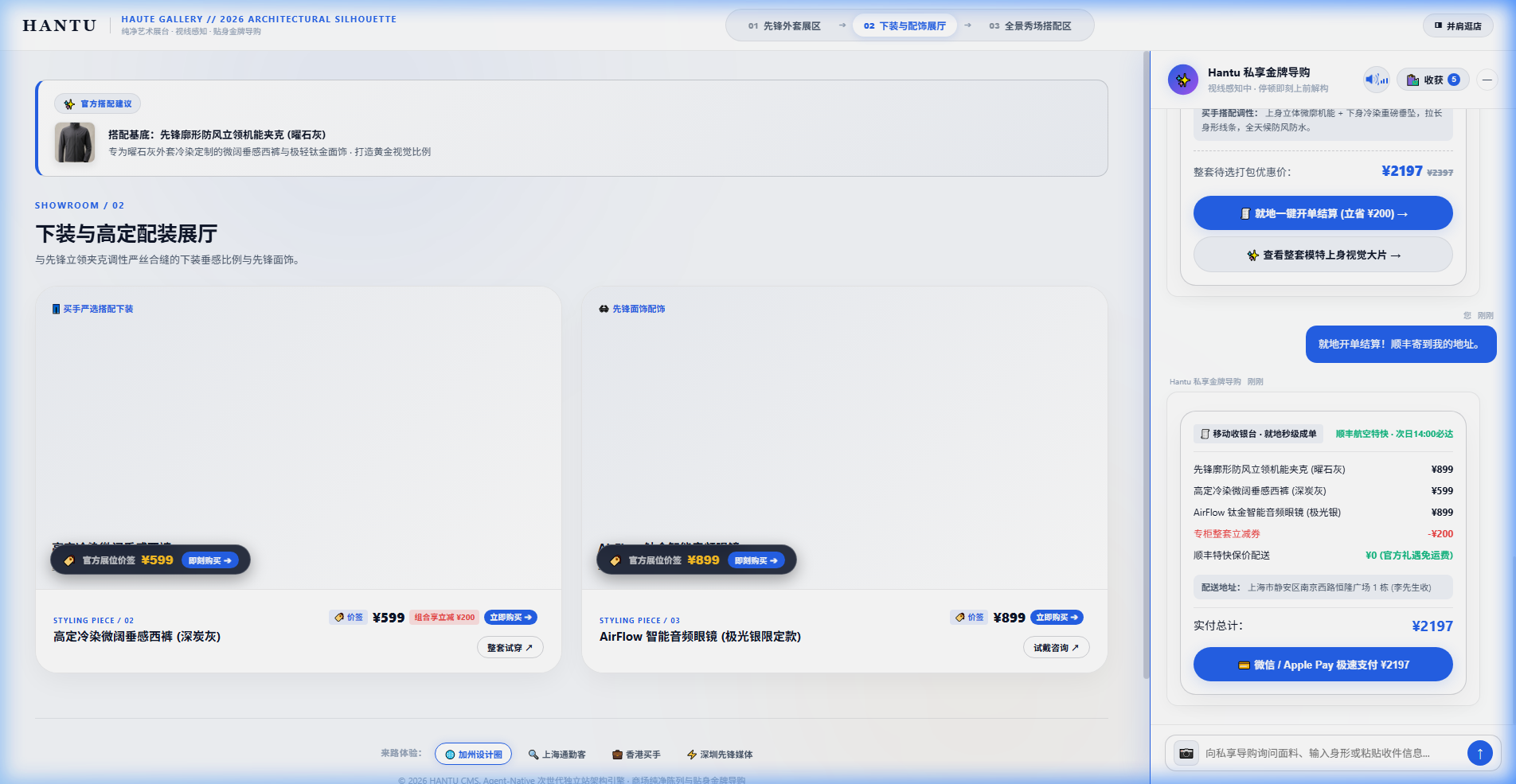
The front-end flagship sales agent senses browsing intent in real time, resolves common concerns with care, and lets visitors complete checkout right inside the conversation — turning every visit smoothly into an order. The back-end GM agent breaks multi-step tasks into pipelines, integrates seamlessly with your enterprise customer systems and inveninventory/procurement/sales workflows, and drives site building, quoting, and fulfillment end to end, so your team can focus on running the business.
- An army of sales reps who know every product by heart
- Your own in-house tech & design team
- Fully automated operations & maintenance
- Fully automated marketing & growth
"Static display is like a mall's product shelf; the agent is the mall's senior concierge." No more relying on self-service browsing in an unmanned supermarket or fixed forms — instead, the front-end concierge proactively greets visitors, answers on the spot, and helps them decide.
Three generations of website paradigms, side by side: which one actually runs your business?
From tedious manual authoring to autonomous agent collaboration — dramatically lower the barrier to maintenance and operating cost.
| Dimension | Traditional Custom Dev / Outsourcing | Typical SaaS Drag-&-Drop Tools | Hantu Gen-AI-CMS |
|---|---|---|---|
| Execution Core | Purely manual operation; workflows easily fall apart | A fixed toolbox — nothing moves unless someone clicks | Front + back dual-core agents deeply coordinated, autonomously driving the business loop |
| Front-End Conversion Model | Self-service "unmanned supermarket"; high customer drop-off | Static cold shelves; multi-level jumps lose customers | Flagship sales agent senses browsing intent in real time, eases concerns, and closes deals directly in conversation |
| On-the-Fly Generation | Only static graphics designed and sliced by hand | Limited to fixed templates; no on-site adaptation | Generate product styling images, architecture diagrams, and lively voice explanations on demand |
| Delivery Timeline | 30–90 days of long development cycles | 3–7 days of manual drag-and-drop assembly | A full site generated from natural language in minutes |
| Enterprise System Integration (CRM / Inventory) | High-cost custom development; long cycles, high risk | Mostly closed systems; manual spreadsheet exports only | Native support for standard open protocols; easy integration with enterprise CRM and inveninventory/procurement/sales workflows |
| Complex Task Execution | Hand-written code; edge cases and safety easily missed | Rigid fixed logic; no flexible handling | Clear step queuing + conflict self-healing + transparent change approval |
| Memory & Knowledge Accumulation | No system memory; staff turnover breaks business context | No memory accumulation; every tweak starts from zero | Independent partitioned memory system that grows more fluent in your business norms over time |
| Data & Privacy Control | High maintenance cost; data scattered everywhere | Centralized cloud hosting; limited autonomy | Supports private deployment of local open-source LLMs; multi-layer security keeps data fully under your control |
Now, start your own generative private-domain era
Own a generative private-domain platform that understands your business, collaborates autonomously, and iterates fast — starting with a single simple brief.
Download the client now and experience the new commercial momentum of dual-core agent deep coordination.